Skip to content

Nutrition · Food Budget

Cat Food Portion & Monthly Cost Calculator

Pick dry, wet, a mix or fresh delivery, enter the prices from your own cans and bags, and see daily portions plus a realistic monthly food budget.

Updated Runs privately in your browser How we calculate

Your cat & food

kcal/day

Not sure? Get it from the Cat Calorie Calculator.

lb
USD
kcal/cup
cups/lb
USD
kcal
%

Portion & budget

Feeding 230 kcal a day costs about $53 a month ($1.75 per day).

Per month$53
Per day$1.75
Per year$640
Dry food per day1/4 cup (0.29) · 0.07 lb
One bag lasts234 days
Bags per month0.1
Cans per day1.3
Cost per 1,000 kcal$7.61
Yearly cost$640

Same calories, different food tiers

Food tierPer 1,000 kcalMonthlyYearly
Budget dry food$0.75$5$63
Mid-range dry food$1.60$11$134
Premium dry + wet mix$4.50$32$378
Fresh-cooked subscription$12.00$84$1,008
  • Compare foods by cost per 1,000 kcal, not price per bag — dense foods need smaller portions.
  • Larger bags are usually cheaper per pound; store kibble in its original bag inside an airtight bin and use within ~6 weeks of opening.
  • Auto-ship discounts (often 5–35%) and store loyalty programs cut the monthly cost of the same food.
  • Measure portions with a kitchen scale; overfeeding by 10% adds both cost and weight.
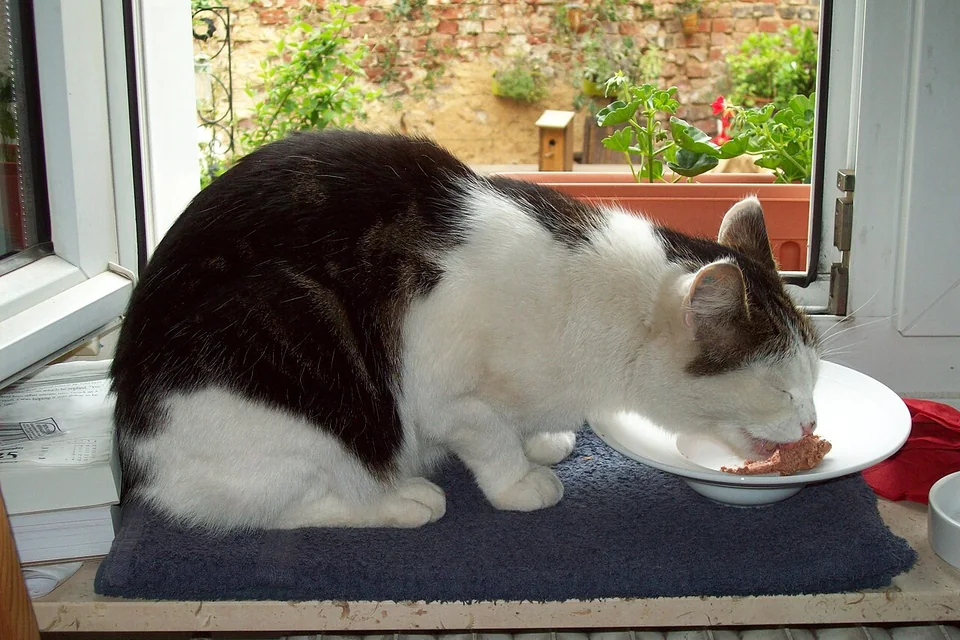
Domestic cat eating from a dish
Nutrition · Food Budget

Use the food label to compare calories per serving.*

How much food does my cat need?

Cats need far fewer calories than most people expect. A typical 10 lb indoor, neutered cat needs about 260 kcal a day — that is only about two-thirds of a cup of dry food, or three small cans of wet food. If you don't know your cat's target yet, the cat calorie calculator works it out from weight and lifestyle, including weight-loss plans.

Cups per pound of dry cat food

Dry cat food has roughly 4 to 4 1/2 cups per pound. A 16 lb bag holds about 67 cups, and a 10 lb cat eating 2/3 cup a day takes a little over three months to finish it. Kibble stays freshest if you finish it within about 6 weeks of opening, so a smaller bag can be the better buy for a single cat.

Daily portions for an indoor neutered adult (dry food 400 kcal/cup, wet 90 kcal per 3 oz can)
Cat weightkcal/dayAll dryAll wet (3 oz cans)50/50 mix
7 lb (3.2 kg)2001/2 cup2 1/4 cans1 1/8 cans + 1/4 cup
9 lb (4.1 kg)2413/5 cup2 2/3 cans1 1/3 cans + 1/3 cup
10 lb (4.5 kg)2612/3 cup2 7/8 cans1 1/2 cans + 1/3 cup
12 lb (5.4 kg)2993/4 cup3 1/3 cans1 2/3 cans + 3/8 cup

These numbers are for cats at a healthy weight. For an overweight cat, feed for the target weight your vet suggests, not the current weight.

Monthly and yearly cat food budget

Feeding a 10 lb indoor cat (about 261 kcal a day)
DietPer monthPer year
Budget dry food≈ $6≈ $70
Mid-range dry food≈ $13≈ $150
Premium dry + wet mix≈ $36≈ $430
50/50 mid dry + canned≈ $57≈ $690
All canned food≈ $100≈ $1,220
Fresh delivery plan≈ $95≈ $1,140

Add roughly $10–$30 a month for litter and $5–$10 for treats to get the full monthly running cost of a cat's daily needs.

Wet vs. dry vs. fresh

Wet food is about 75–80% water, which helps cats that don't drink much and makes meals more filling per calorie. Dry food is the budget-friendly choice and keeps well in puzzle feeders, which slow fast eaters and add activity. Fresh delivery food is very palatable but costs the most. A common, affordable compromise is a measured portion of dry food plus one wet meal a day.

Whatever you feed, check for an AAFCO "complete and balanced" statement for your cat's life stage. Kittens need a growth or all-life-stages formula until about 12 months.

Saving money without short-changing your cat

  • Weigh dry food — overfeeding is the most common hidden cost.
  • Buy cans by the case; price per can often drops 15–25%.
  • Use wet food as one meal or a topper instead of the whole diet.
  • Store kibble sealed in its original bag and finish it within about 6 weeks.
  • Change foods gradually over 7–10 days to avoid stomach upset and waste.
Methodology: how this calculator works
Daily calories come from RER = 70 × weight (kg)^0.75 multiplied by a cat life-stage factor (neutered indoor adult 1.2 by default). Portions divide the wet and dry shares of that total by the kcal per can and per cup from your label; bag life uses about 4.2 cups per lb by default. Monthly cost multiplies the daily cost by 30.4 days using your entered prices, with default reference rates of about $0.75 (budget dry), $1.60 (mid-range dry), $12–$13 (canned) and $12 (fresh delivery) per 1,000 kcal.

Read the full methodology, formulas and source list

Frequently asked questions

How much dry food should I feed my cat a day?
Most 8–10 lb indoor cats need about 220–260 kcal a day. With a dry food of about 400 kcal per cup, that is roughly 1/2 to 2/3 cup a day if dry food is the only diet. Check the kcal per cup on your bag and measure with a kitchen scale or proper measuring cup.
How many cans of wet food should a cat eat a day?
A 10 lb indoor cat eating only wet food needs about 261 kcal, which is roughly three 3 oz cans at 90 kcal each, or about one and a half 5.5 oz cans at 170 kcal each. Calorie content varies widely between brands, so use the number on your label.
How many cups are in a pound of cat food?
Most dry cat food has about 4 to 4 1/2 cups per pound. A 16 lb bag holds roughly 65–70 cups, which lasts a single 10 lb cat about three months.
How much does it cost to feed a cat per month?
For a 10 lb adult cat, expect about $6–$15 a month on dry food, around $35–$60 for a premium dry-and-wet mix, and roughly $55–$130 for an all-wet diet depending on can prices. Fresh delivery plans often run $90 or more a month.
Is it better to feed a cat wet or dry food?
Both can be complete and balanced. Wet food adds water and helps with satiety and urinary health in many cats; dry food is cheaper and works well in puzzle feeders. Many vets suggest including some wet food, especially for cats prone to urinary problems or weight gain. Ask your vet what suits your cat.

Informational tool only — not a substitute for veterinary medical advice. Results are estimates built from published veterinary references and the details you enter. Your pet's needs can differ, so confirm feeding plans, health concerns and costs with your veterinarian. If you suspect poisoning or an emergency, call your vet or an emergency animal hospital now. Full veterinary disclaimer.

Photo: Carsondelake, CC BY-SA 3.0 (Wikimedia Commons)