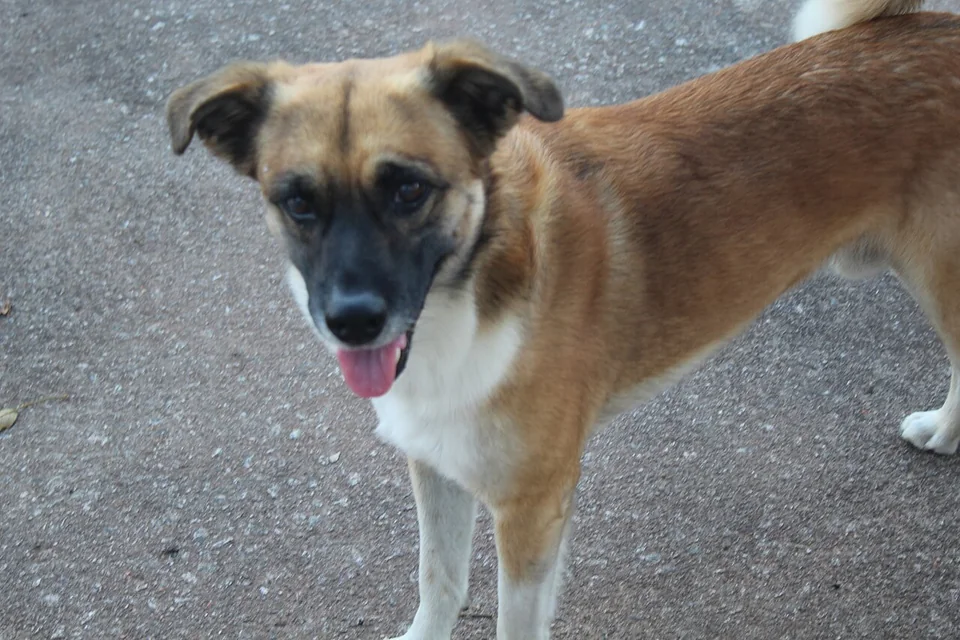
How the dog calorie formula works
Every dog burns a baseline amount of energy just keeping warm, breathing and digesting. Veterinarians call this the Resting Energy Requirement (RER), and it is calculated from body weight in kilograms:
RER = 70 × (weight in kg)0.75
Example: a 20 kg dog → 70 × 200.75 ≈ 662 kcal a day at rest.
Real life adds walks, play, growth and hormones, so RER is multiplied by a life-stage factor to get the Maintenance Energy Requirement (MER) — the number you actually feed. The calculator above does both steps and shows a range, because two dogs of the same weight can differ by 20% or more.
Why weight goes to the 0.75 power
Small dogs burn more energy per pound than big dogs. A flat "calories per kg" rule overfeeds giant breeds and underfeeds toy breeds. The 0.75 exponent corrects for that, which is why a 100 lb dog needs only about five and a half times the calories of a 10 lb dog, not ten times.
Life-stage factors (MER multipliers)
These are the multipliers most veterinary teaching hospitals start with. Pick the one that fits your dog today, then fine-tune using body condition.
| Dog | Multiply RER by | Notes |
|---|---|---|
| Puppy under 4 months | 3.0 | Recalculate every 2 weeks as weight climbs |
| Puppy 4–12 months | 2.0 | Large breeds: keep lean, feed large-breed puppy food |
| Spayed / neutered adult | 1.6 | The most common setting for pet dogs |
| Intact adult | 1.8 | Hormones raise energy use slightly |
| Active / high-energy adult | 2.0 (1.8–2.5) | Daily runs, hiking, dog sports |
| Working or sporting dog | 2.0–5.0 | Herding, sledding, hunting seasons |
| Senior, less active | 1.4 | Watch muscle as well as weight |
| Weight loss | 1.0 × RER of target weight | Under veterinary guidance |
Dog calories per day by weight (lb and kg)
Quick reference for healthy adults. "Cups" assume a typical dry food with about 375 kcal per 8 oz measuring cup — check your bag, because foods range from about 300 to over 500 kcal per cup.
| Weight | RER (kcal) | Neutered adult (1.6) | Active (2.0) | Cups/day at 375 kcal |
|---|---|---|---|---|
| 10 lb (4.5 kg) | 218 | 348 | 435 | ≈ 1 |
| 20 lb (9.1 kg) | 366 | 585 | 732 | ≈ 1 1/2 |
| 30 lb (13.6 kg) | 496 | 794 | 992 | ≈ 2 |
| 40 lb (18.1 kg) | 615 | 985 | 1,231 | ≈ 2 2/3 |
| 50 lb (22.7 kg) | 727 | 1,164 | 1,455 | ≈ 3 |
| 60 lb (27.2 kg) | 834 | 1,335 | 1,668 | ≈ 3 1/2 |
| 70 lb (31.8 kg) | 936 | 1,498 | 1,873 | ≈ 4 |
| 80 lb (36.3 kg) | 1,035 | 1,656 | 2,070 | ≈ 4 1/2 |
| 100 lb (45.4 kg) | 1,223 | 1,958 | 2,447 | ≈ 5 1/4 |
Body condition score (BCS 1–9): ideal weight vs current weight
The scale tells you how heavy your dog is, but not whether that weight is healthy. Vets use a body condition score for that: a 1–9 scale based on what you can feel and see. A score of 4–5 is a healthy body condition. Each point above 5 means roughly 10% more weight than the dog's ideal weight.
| Score | Ribs | Waist and belly | What it means |
|---|---|---|---|
| 1–3 | Easy to see; little or no fat over them | Very deep waist, hip bones may show | Too thin — see your vet before adding food |
| 4–5 | Easy to feel under a light fat cover | Waist visible from above; belly tucks up from the side | Healthy weight — feed for current weight |
| 6–7 | Hard to feel under a thicker fat layer | Waist barely visible or missing | Overweight — about 10–20% above ideal |
| 8–9 | Very hard or impossible to feel | No waist; belly sags; fat over the back and tail base | Obese — about 30–40% above ideal; plan weight loss with your vet |
How to check your dog at home
- Ribs: run your flat hands along the chest. They should feel like the back of your hand — bones under a thin layer, not knuckles (too thin) and not your palm (excess body fat).
- Waist from above: look down while your dog stands. You should see a gentle inward curve behind the ribs.
- Belly from the side: the belly line should rise from the chest toward the back legs.
Why ideal weight changes daily calorie intake
Calories are only as good as the weight you enter. For a dog at a healthy body condition, use your dog's current weight. For an overweight dog, the calorie needs that matter are those of its ideal weight, because feeding to maintain today's weight keeps the extra fat in place.
Example: a 66 lb neutered dog with a BCS of 7 is about 20% over its ideal weight, so its target is about 55 lb.
Maintenance energy requirement at 66 lb (1.6 × RER): about 1,433 kcal a day.
Maintenance at the 55 lb ideal weight: about 1,250 kcal a day.
Weight-loss start (1.0 × RER at 55 lb): about 781 kcal a day, for a loss of roughly 0.7–1.3 lb a week.
In the calculator, choose the weight-loss setting and enter the target weight; it then works out calories from the ideal weight, not the current one. Count meals and treats together in the total daily calories, re-score the body condition every 2–4 weeks, and let your vet confirm the target — they can also check for thyroid or other problems that make weight loss hard.
Puppies, weight loss and seniors
Feeding a growing puppy
Puppies need roughly two to three times the calories of an adult of the same weight. Use the puppy setting with your puppy's current weight, split the total into 3–4 meals under 6 months, and recalculate every couple of weeks. Not sure how big your puppy will get? The puppy weight calculator estimates adult size so you can plan the switch to adult food.
Calories for weight loss
For an overweight dog, vets usually calculate calories from the target weight and start around 1.0 × RER. A 70 lb dog with a target of 60 lb, for example, would start near 834 kcal a day rather than the 1,500 kcal its current weight suggests. A safe pace is about 1–2% of body weight per week. Fiber-rich weight-management foods and swapping some treats for green beans or carrot pieces help with hunger.
Senior dogs
Many older dogs slow down and need fewer calories, but some lose muscle and need more protein, not less food. If your senior is losing weight without trying, see your vet before increasing portions.
The 10% treat rule
Treats, dental chews and table scraps should stay under about 10% of daily calories. For a 40 lb neutered dog eating about 985 kcal, that is roughly 100 kcal — about two medium dental chews or a handful of small training treats. Plain carrot pieces and green beans make good low-calorie extras. Before sharing human food, run it through the dog toxic food checker.
Turning calories into cups
Divide daily calories by the kcal per cup on your food label. A dog needing 985 kcal on a food with 375 kcal per cup eats about 2.6 cups a day, usually split into two meals. To see how long a bag lasts and what it costs per month, use the dog food calculator.