Skip to content

Safety · People Foods

Dog Toxic Food Safety Checker (Grapes, Raisins, Onion & Garlic)

Choose the food, enter how much your dog ate and your dog's weight. You'll see the risk level, what it does in the body, when signs appear and what to do next.

Updated Runs privately in your browser How we calculate

What did your dog eat?

lb

One grape weighs about 0.2 oz (5 g); one raisin about 0.02 oz (0.5 g).

Grapes · Toxic

Emergency

Grapes: emergency at ~2.1 g per kg body weight.

Go to the nearest emergency veterinary hospital now (call ahead) and bring the packaging. Early decontamination is critical.

Amount eaten1.0 oz
Dog's weight30.0 lb
Dose2.1 g per kg body weight
Toxic principle
Tartaric acid (suspected)
How it harms dogs
Acute kidney injury
Onset
Vomiting within 6–12 hours; kidney injury within 24–72 hours
Dose notes
No reliable safe dose — some dogs react to a few grapes while others tolerate more. Treat any ingestion as an emergency.

Clinical signs

  • Vomiting within hours
  • Lethargy
  • Reduced appetite
  • Reduced or no urine (24–72 h)

ASPCA Animal Poison Control Center: (888) 426-4435 · Pet Poison Helpline: (855) 764-7661 (consultation fees may apply). If your dog is collapsing, seizing or struggling to breathe, go to the nearest emergency vet now.

This tool is an educational reference based on published veterinary toxicology data (Merck Veterinary Manual, ASPCA APCC). Individual dogs vary, product content varies, and a 'low' result does not guarantee safety. It does not replace advice from your veterinarian or a poison control service.

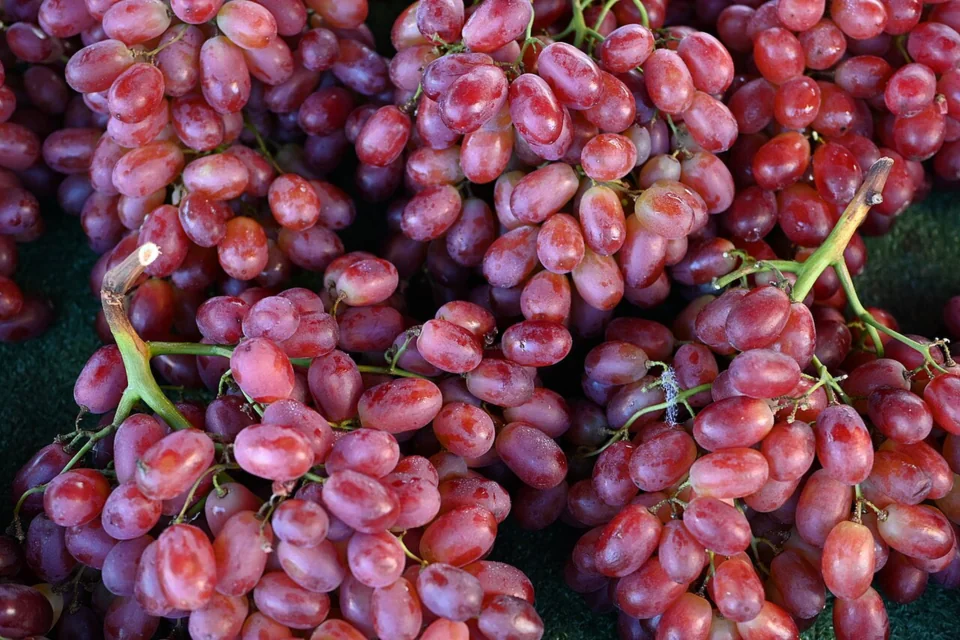
Bunches of fresh red grapes piled together
Safety · People Foods

Keep grapes and raisins out of reach of dogs.*

If your dog just ate something toxic

  1. Remove any remaining food and keep the packaging or recipe.
  2. Write down what was eaten, roughly how much, and when.
  3. Call your vet, an emergency clinic, or the ASPCA Animal Poison Control Center at (888) 426-4435 (a fee may apply).
  4. Don't make your dog vomit at home unless you're told to — some substances do more harm coming back up, and home methods carry their own risks.

For grapes, raisins, xylitol and large amounts of onion or garlic, early treatment matters far more than waiting to see if symptoms appear.

Grapes, raisins and currants

There is no known safe amount. Grapes, raisins, sultanas and currants can cause acute kidney injury in dogs. Research points to tartaric acid as the likely cause, which may explain why some dogs react to a handful and others don't — the amount varies from fruit to fruit. Raisins are more concentrated than fresh grapes. Watch for vomiting (often within 6–12 hours), diarrhea, lethargy and not eating, followed by reduced or no urination within 1–3 days. Treat any amount as an emergency, including trail mix, raisin bread, cookies and grape juice.

Xylitol (birch sugar)

Xylitol is a sweetener found in sugar-free gum, mints, candy, some peanut and nut butters, baked goods, chewable vitamins and toothpaste. In dogs it triggers a large release of insulin.

  • About 100 mg/kg (0.1 g/kg): blood sugar can crash within 15–60 minutes — weakness, wobbling, collapse, seizures.
  • About 500 mg/kg (0.5 g/kg): risk of liver failure, which may appear 1–3 days later.

Some gums contain 1 g of xylitol per piece, so just one or two pieces can be dangerous for a 20 lb (9 kg) dog. Always check labels for "xylitol" or "birch sugar" before sharing peanut butter.

Onions, garlic, chives and leeks

Plants in the allium family contain compounds that cause oxidative damage to red blood cells, leading to hemolytic anemia (red blood cells breaking apart). Raw, cooked, dried and powdered forms are all risky; powders are especially concentrated, and garlic is roughly three to five times stronger than onion. Problems have been reported after a single meal of about 0.5% of body weight in onion — around 2 1/2 oz for a 30 lb dog — or after smaller amounts eaten over several days. Signs such as weakness, pale gums, fast breathing and red or brown urine often appear 1–5 days later. Watch for hidden sources: gravies, baby food, soups and seasoned meats.

More foods to keep away from dogs

Macadamia nuts

Even a small handful can cause hind-leg weakness, wobbling, tremors, vomiting and fever within about 12 hours. Most dogs recover within 24–48 hours with care, but nuts mixed with chocolate (like in cookies) add a second risk.

Alcohol

Dogs are much more sensitive to alcohol than people. Beer, wine, spirits, mixed drinks and even sweet cocktails left within reach can cause vomiting, wobbling, low blood sugar, low body temperature and collapse. Small dogs can be poisoned by just a few sips of spirits.

Raw yeast bread dough

Unbaked dough keeps rising in a warm stomach, which can stretch it painfully or cause bloat. As the yeast ferments, it also produces alcohol. A swollen belly, unproductive retching and wobbliness after eating dough need emergency care.

Caffeine

Coffee grounds, beans, tea bags, energy drinks and caffeine pills act like chocolate's stimulants and can cause a racing heart, agitation and tremors.

Safe alternatives your dog will love

Healthy swaps and serving sizes
Instead of…TryServing
Grapes or raisinsBlueberriesA few berries (small dog) to a small handful (large dog)
Chips or crackersBaby carrots or green beansA few pieces, cut to prevent choking
Sweet dessertsSeedless watermelon or apple slices (no core)A few small cubes or slices
Sugar-free peanut butterXylitol-free peanut butter1/2–1 tsp (small) to 1 tbsp (large)
Seasoned leftoversPlain cooked chicken, no bones or skinCounts toward the 10% treat allowance
Pumpkin piePlain canned pumpkin1 tsp (small) to 1–2 tbsp (large)

Treats and extras should stay under about 10% of your dog's daily calories. The dog calorie calculator shows your dog's treat allowance.

Methodology: how this calculator works
Each food is classed as toxic, caution or safe using ASPCA Animal Poison Control and Merck Veterinary Manual references. Where published dose thresholds exist (for example xylitol 0.1 g/kg for hypoglycemia and 0.5 g/kg for liver injury; onion about 5 g/kg in a single exposure), the checker compares the amount eaten per kg of your dog's body weight. Foods with unpredictable toxicity, such as grapes and raisins, are always flagged as an emergency. This is a reference tool, not a diagnosis; always call a veterinarian or poison control.

Read the full methodology, formulas and source list

Frequently asked questions

How many grapes or raisins are toxic to a dog?
No amount of grapes, raisins or currants is known to be safe. Some dogs develop kidney injury after eating just a few, while others eat more without problems, and there is no way to predict which dog will react. Treat any amount as an emergency and call your vet or poison control right away, even if your dog seems fine.
How much xylitol is toxic to dogs?
About 100 mg per kg of body weight (0.1 g/kg) can cause a dangerous drop in blood sugar, and about 500 mg/kg (0.5 g/kg) can cause liver failure. A single piece of some sugar-free gums contains 0.3–1 g of xylitol, so a few pieces can poison a small dog. Xylitol is also sold as birch sugar.
Can dogs eat onions or garlic?
No. Onions, garlic, chives and leeks, whether raw, cooked or powdered, damage dogs' red blood cells and can cause anemia. Problems have been seen after about 0.5% of body weight in onion in one sitting, or smaller amounts eaten repeatedly. Garlic is several times stronger than onion, and onion and garlic powders are very concentrated.
How long after eating something toxic will a dog show symptoms?
It depends on the food. Xylitol can cause weakness within 15–60 minutes. Grapes and raisins usually cause vomiting within 6–12 hours and kidney problems within 24–72 hours. Macadamia nut signs appear within about 12 hours. Onion and garlic anemia often shows up 1–5 days later. Early treatment works best, so don't wait for symptoms.
What human foods are safe for dogs?
Plain carrots, green beans, blueberries, apple slices without the core, seedless watermelon, plain canned pumpkin, bananas in small amounts and plain cooked chicken without bones or seasoning are good options. Keep all treats and extras under about 10% of daily calories.
What should I do if my dog ate something toxic?
Note what was eaten, how much and when, and keep the package. Call your vet, an emergency clinic, or the ASPCA Animal Poison Control Center at (888) 426-4435 (a fee may apply). Don't make your dog vomit at home unless a vet or poison control advises it.

Informational tool only — not a substitute for veterinary medical advice. Results are estimates built from published veterinary references and the details you enter. Your pet's needs can differ, so confirm feeding plans, health concerns and costs with your veterinarian. If you suspect poisoning or an emergency, call your vet or an emergency animal hospital now. Full veterinary disclaimer.

Photo: PattayaPatrol, CC BY-SA 4.0 (Wikimedia Commons)